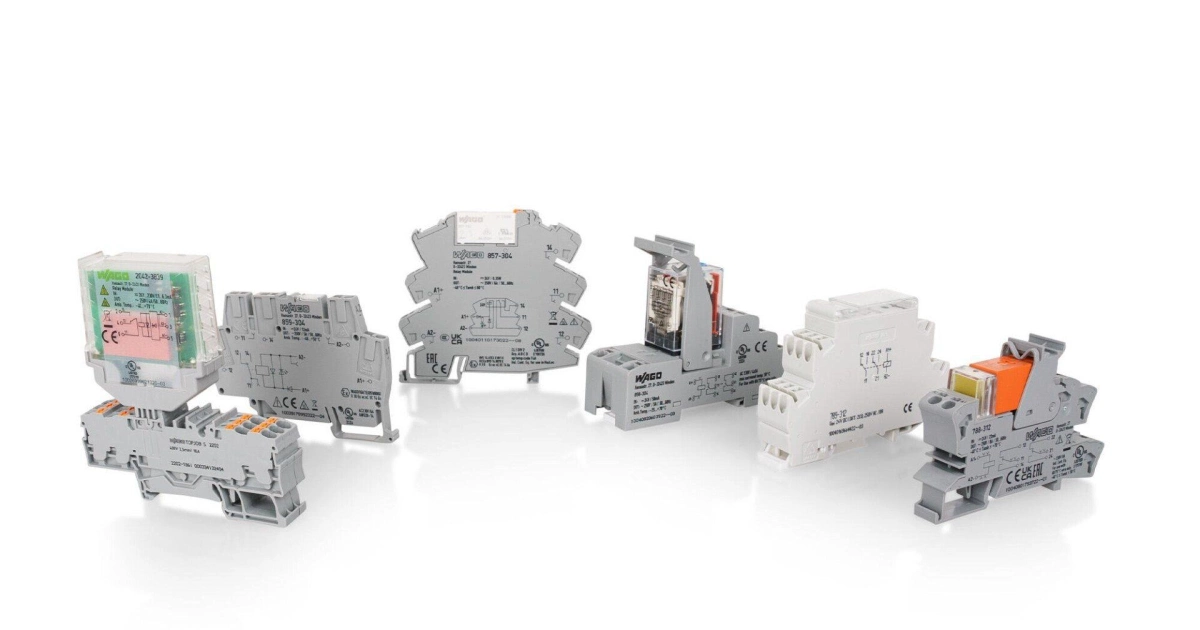
Wago 221: Reshaping the Industrial Landscape by Challenging Traditional Giants
In the dynamic world of industrial automation and electrical engineering, innovation often arrives in unexpected forms. While major players like Allen-Bradley (AB) have long dominated the market with their comprehensive suites of PLCs, HMIs, and associated components, a quiet revolution is underway. The humble Wago 221 series lever-nut connector, renowned for its simplicity and reliability, is increasingly becoming a strategic tool for industrial facilities seeking efficiency, resilience, and cost savings. This shift isn't just about replacing a single part; it represents a growing *Wago market matter*, signaling a broader trend where agile, user-friendly solutions are gaining significant industrial market share, even at the expense of established proprietary systems.
The core of this disruption lies in the Wago 221's ability to offer a compelling alternative where traditional solutions fall short, particularly in scenarios of supply chain volatility, urgent repair needs, and the constant drive for operational optimization. Understanding how Wago 221 is not just filling gaps but actively displacing traditional components provides crucial insight into the evolving priorities of modern industrial operations.
The Unseen Shift: How Wago 221 is Reshaping Industrial Connections
The industrial sector thrives on reliability and robust performance, but also on efficiency and adaptability. For decades, complex, often proprietary, wiring solutions were the norm, demanding specialized tools, training, and a deep understanding of specific manufacturer ecosystems. The Wago 221 series challenges this paradigm with its elegant simplicity. These compact, tool-free connectors allow for fast, secure, and touch-proof connections for solid, stranded, and fine-stranded conductors.
What makes them a game-changer?
*
Ease of Use: The iconic orange levers make wiring incredibly fast and intuitive. Simply open the lever, insert the stripped conductor, and close the lever. No twisting, no crimping, no special tools required. This drastically reduces installation time and minimizes potential for wiring errors.
*
Versatility: The Wago 221 connectors can handle a wide range of wire sizes (from 0.14 to 4 mm² or 24–12 AWG, depending on the model) and conductor types, making them incredibly flexible for various applications within a plant.
*
Reliability: Wago's spring pressure connection technology ensures a permanent, vibration-proof, and maintenance-free connection, critical in demanding industrial environments where loose connections can lead to costly downtime.
*
Transparency: The transparent housing allows for visual inspection of the connection, ensuring proper conductor stripping and insertion, adding an extra layer of confidence.
These features, while seemingly minor, accumulate to significant operational advantages. When industrial engineers and maintenance teams prioritize speed, reliability, and reduced complexity, Wago 221 becomes an undeniable choice, subtly expanding Wago's presence and influencing the *Wago market matter* across various applications.
When Supply Chains Falter: Wago as the Unexpected Solution
One of the most potent drivers behind Wago 221's burgeoning market share has been the unprecedented supply chain disruptions of recent years. The anecdote from a Reddit forum, where a Wago 221 connector was used to bypass a critically delayed Allen-Bradley MobileView HMI junction box, perfectly encapsulates this phenomenon. Facing a six-month lead time for proprietary AB parts needed to restore a machine's functionality after a cable was ripped out, an immediate, practical solution was paramount.
The engineering team couldn't get the specific AB junction box (2711T-JBIP20DC) or jumper (2711T-JUMP) required for an E-Stop circuit bypass. The consequence? Downtime and a loss of manual maneuverability. The stopgap measure – jumping out the circuit with a readily available Wago 221 – not only got the machine operational again but, as the account highlights, became a permanent fixture due to the lack of a PO for the original parts. This is a direct example of *lost market share to Wago*, not through direct competition in complex automation systems, but by providing an immediate, effective, and available alternative in a pinch.
This scenario is far from isolated. Many industrial facilities have experienced:
- Extended Lead Times: Proprietary parts from large manufacturers can often have lead times stretching months or even over a year, crippling production.
- Obsolete Parts: Older equipment might require parts that are no longer manufactured, forcing costly upgrades or inventive workarounds.
- High Costs: OEM replacement parts can be exorbitantly priced, especially when required urgently.
In these critical moments, a common, off-the-shelf solution like the Wago 221 can be the difference between continuous operation and complete shutdown. It empowers maintenance teams to react swiftly, minimizes costly downtime, and ultimately shifts purchasing habits towards more accessible and versatile components. This practicality solidifies Wago's position not just as a connector manufacturer but as a critical enabler of industrial resilience. To dive deeper into this aspect, read about
Wago: The Unexpected Fix for PLC Part Shortages and Downtime.
Beyond Emergency Fixes: Wago's Long-Term Value Proposition
While emergency repairs highlight Wago 221's immediate utility, its long-term value proposition extends far beyond crisis management. Companies are increasingly integrating Wago 221 into new installations and planned maintenance strategies due to its intrinsic benefits:
*
Cost Reduction: The initial purchase price of Wago 221 connectors is often significantly lower than proprietary junction boxes or terminal blocks, especially when considering the labor cost savings from faster installation. Reduced downtime directly translates to increased profitability.
*
Maintenance Efficiency: Troubleshooting becomes simpler. Clear visual inspection, easy disconnection and reconnection of wires, and the elimination of screw-tightening checks streamline maintenance tasks. This reduces the Mean Time To Repair (MTTR) and boosts overall plant efficiency.
*
Standardization Potential: Many facilities struggle with a patchwork of different wiring methods and connectors. Adopting Wago 221 as a standard for certain applications can simplify inventory, training, and maintenance procedures across the plant.
*
Space Saving: The compact design of the Wago 221 connectors allows for more efficient use of space within control panels and junction boxes, potentially reducing the overall footprint and cost of enclosures.
This cumulative advantage ensures that even when proprietary parts are available, the decision to revert might not be made. The demonstrable benefits of Wago 221 in terms of efficiency, cost, and reliability often outweigh the perceived necessity of sticking to an original, more complex, or more expensive solution. This proactive adoption significantly contributes to the growing *industrial markt matter* of Wago products. For a broader perspective on Wago's impact on traditional PLC markets, explore
How Wago Solutions Disrupt Traditional PLC Market Share.
Practical Applications and Best Practices for Implementing Wago 221
The versatility of Wago 221 connectors makes them suitable for a myriad of industrial applications:
- Lighting Circuits: Ideal for connecting lighting fixtures, especially in commercial and industrial settings where quick installation and reliability are key.
- Control Panels: Used for internal wiring, sensor connections, and power distribution within control cabinets, simplifying complex wiring schemes.
- Motor Controls: Connecting motor leads to control circuits, providing a secure and easily maintainable interface.
- Temporary Bypasses & Test Points: As demonstrated by the AB example, they are invaluable for temporary wiring solutions, testing, and fault isolation.
- OEM Integration: Many machine builders are now incorporating Wago 221 connectors into their designs for internal wiring, recognizing the benefits for installation and future servicing.
Tips for Optimal Use:
- Proper Stripping: Always ensure conductors are stripped to the recommended length (typically 9-11 mm) to ensure full contact and prevent stray strands.
- Visual Check: Utilize the transparent housing to visually confirm proper conductor insertion and ensure no insulation is crimped.
- Lever Orientation: For panel work, consider the lever orientation for future access and maintainability.
- Current and Voltage Ratings: Always adhere to the specified current and voltage ratings for the particular Wago 221 model being used.
- Secure Mounting: While the 221 is often free-floating, accessories like mounting carriers allow for secure attachment in panels, maintaining an organized layout.
Conclusion
The rise of Wago 221 in industrial settings is more than just a testament to a well-engineered connector; it's a clear indicator of a shift in industrial priorities. Facilities are increasingly valuing agility, immediate availability, and cost-effective simplicity over proprietary ecosystems, especially when those ecosystems are prone to supply chain vulnerabilities. By providing a reliable, user-friendly, and readily available alternative to traditional, often complex and expensive, components, Wago 221 is not just filling a void but actively *gaining industrial market share*. The long-term implications are clear: as industries continue to demand greater resilience and efficiency, solutions like the Wago 221 will only further solidify their *Wago market matter*, continuing to reshape the industrial landscape one connection at a time.